Admissions:
Presencial: +34 918257554
Students:
Presencial: +34 914146611
Whatsapp
26708

What are you looking for?

Ej: Design degree, admissions, events...

Totem

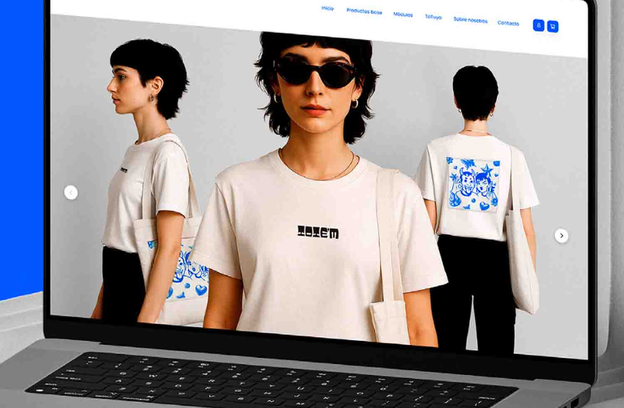
Development of a brand committed to sustainability, transforming tote bags and everyday fashion into durable, modular, and environmentally conscious products.
Proyecto - Totem _7
Students

Lorena Martín Entrialgo

Teachers or tutors

Kenneth Gómez

Area of knowledge and degree

Design, Grado en Marketing

Publication year

2025

Project description

This Final Degree Project begins with a critical reflection on tote bags, originally conceived as a sustainable alternative to plastic but which have become a symbol of excessive consumption. The project examines how greenwashing, the sustainability paradox, and the logic of capitalism have distorted the original ecological purpose of these products. From this problem arises “TOTEM,” a redesign proposal that initially focused on providing a functional and sustainable solution for tote bags but evolved into a broader modular system, also applicable to clothing and home décor items.

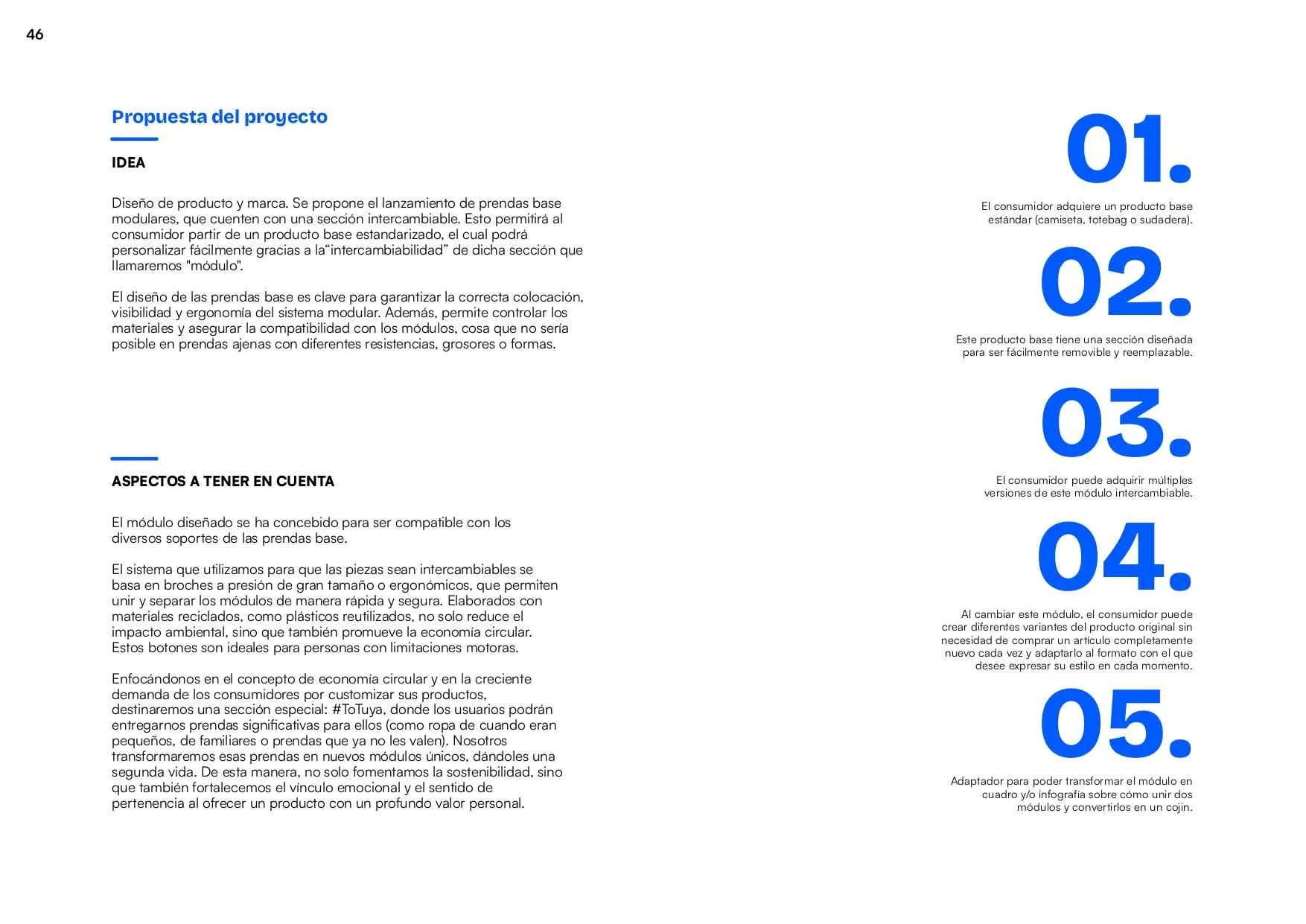
The system allows modules to be swapped on T-shirts, sweatshirts, tote bags, cushions, or wall art, adapting the design to different uses and contexts without the need to purchase entirely new products. The project is based on principles of circular economy, eco-design, accessible personalization, and ethical production. It also includes strategies to encourage emotional reuse through #ToTuya, a service for transforming garments with sentimental value.

The work combines theoretical research, market analysis, and brand development to propose an innovative alternative to the current textile and home décor consumption model, promoting a more conscious, versatile, and long-lasting approach to fashion and lifestyle.

Problem addressed

The evolution of tote bags, originally conceived as a sustainable alternative to reduce the environmental impact of plastic and paper bags, has turned them into a fashion product subject to excessive use and mass production, contradicting their original purpose. Instead of being an ecological solution, they have become a symbol of overconsumption in fashion, generating a significant negative environmental impact.

This raises the question: How can we redesign tote bags to fulfill their sustainable function without contributing to overproduction and while addressing consumerism? Could this approach be extended to the rest of the textile industry?
Objectives and justification

  • Design a modular system of textile products that allows users to personalize and reuse garments and accessories, thereby reducing the need for new purchases.
  • Research and select sustainable materials and ethical production processes that promote circularity and minimize environmental impact.
  • Develop a brand strategy that encourages conscious and emotional consumption through personal connection with the products.
  • Implement accessible design solutions that enable independent use by people with functional diversity.
  • Establish a business model focused on local production, on-demand design, and recycling or transformation programs for products at the end of their life cycle.

Brand development

Visual identity

Logo

The logo is constructed using a grid system that ensures precision and consistency in each of its elements. Basic geometric shapes, primarily circles and curved lines, are used to define the contours and internal details of each letter, resulting in a harmonious and modern design. Each stroke and space has been carefully calculated to maintain balanced proportions, enhancing both legibility and visual identity.

The safe area is precisely defined by the counterform inside the letter “o”: this negative space indicates the minimum distance that must remain clear around the logo. This ensures a consistent and proportional margin that preserves its legibility and presence across all applications.

Visual identity

Corporate palette

The palette is built around a vibrant, youthful blue that conveys energy, innovation, freshness, and dynamism, balanced by a pure white that provides clarity and contrast. Secondary blues add depth and lightness without clashing, while pink serves as an accent of creativity and differentiation, highlighting key points with an original touch without disrupting the overall color harmony.

Visual identity

Characters

The “Devil Chic” or “Sly Fiend” aesthetic aims to represent a playful, critical, and emotional spirit through mischievous yet symbolic characters, allowing everyday emotions and situations to be reinterpreted with humor and irony, becoming a form of personal expression.

Inspired by the retro style of the 2000s, the concept incorporates digital icons and pop culture elements such as butterflies, flames, hearts, and smiley faces, evoking digital nostalgia, DIY culture, and the early forms of online self-expression.

The use of halftone and a dual-color palette adds texture, contrast, and emotional coding, making the designs not only communicative but also a fun and original way for users to dress, express themselves, and connect with their surroundings.