28835

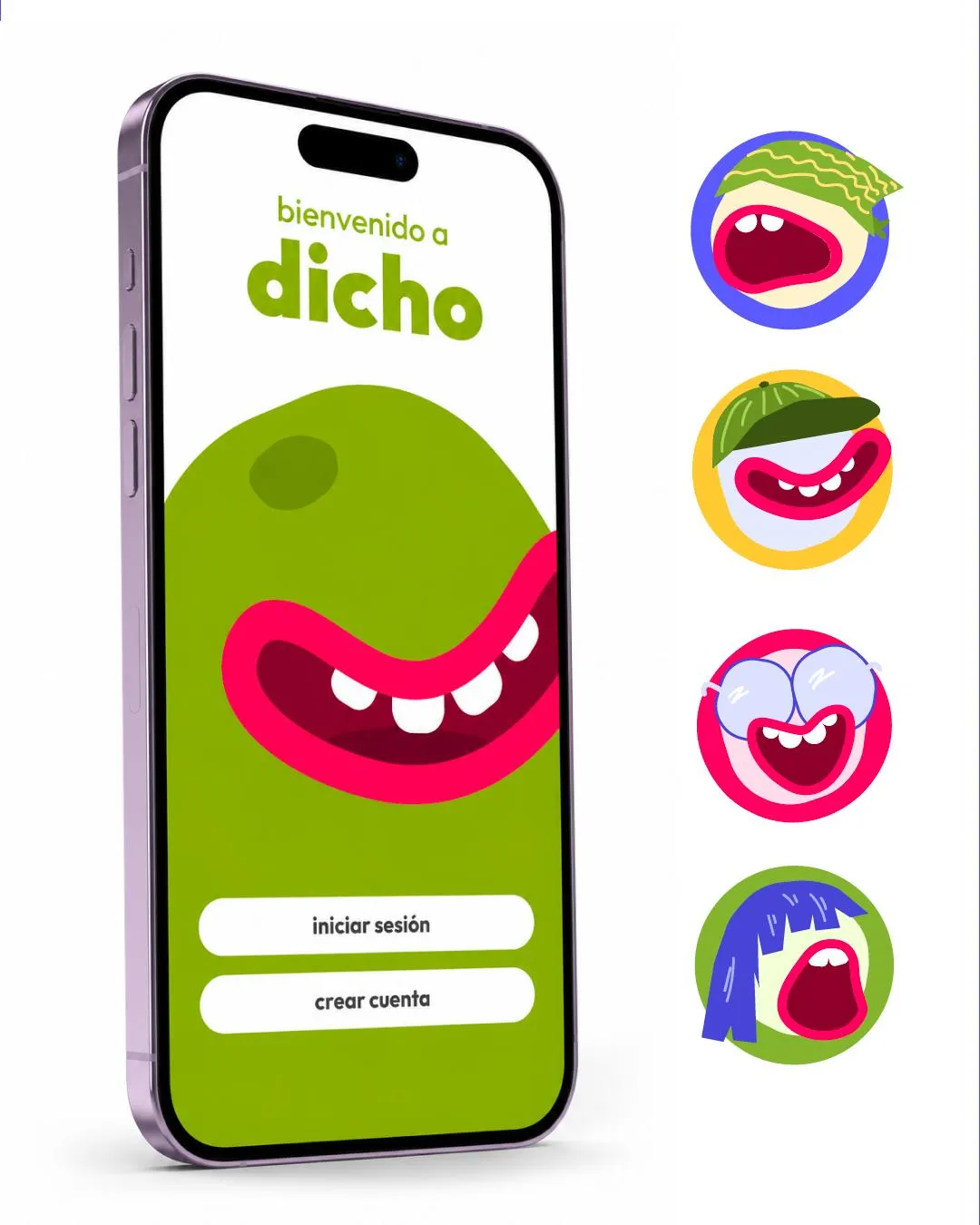
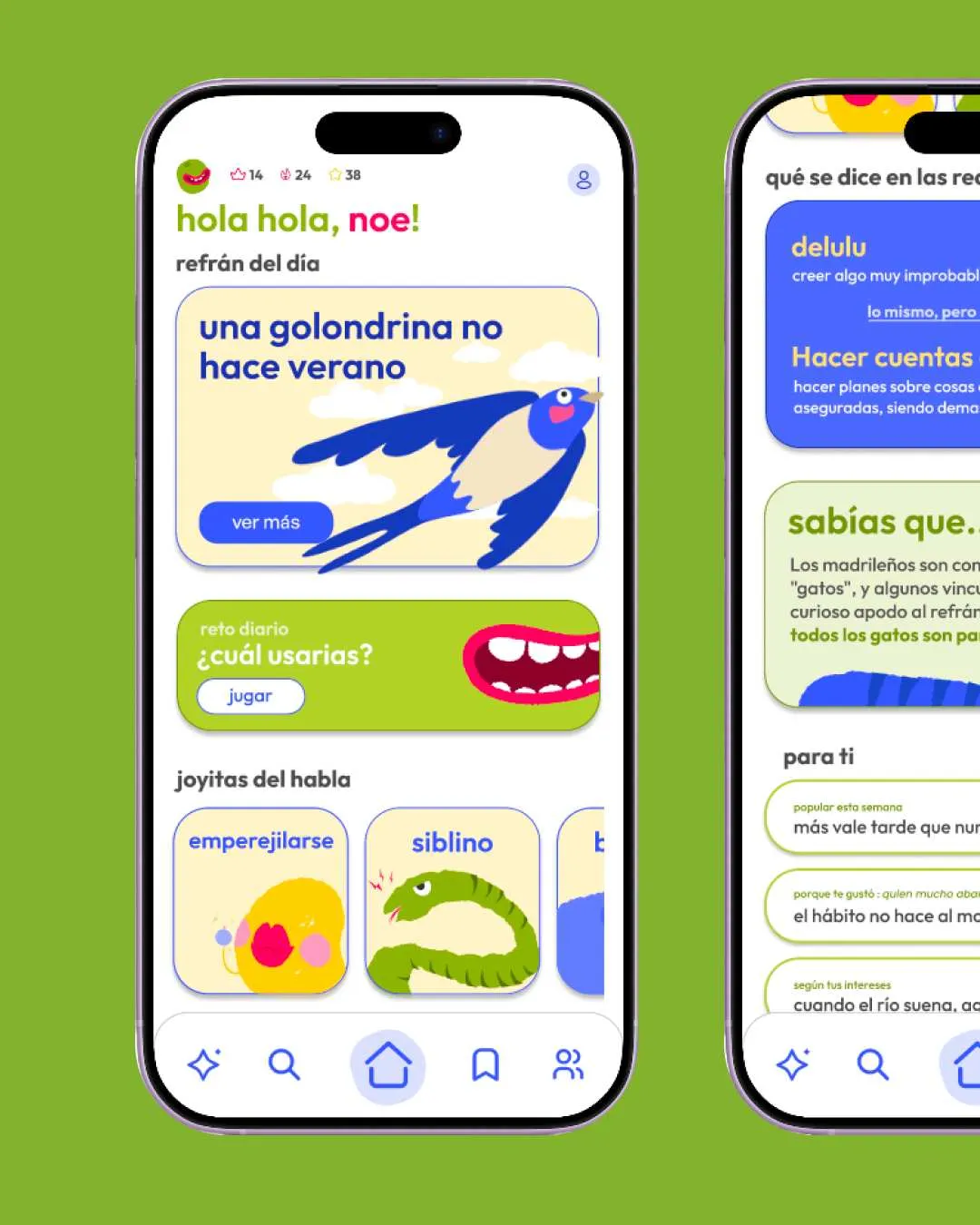
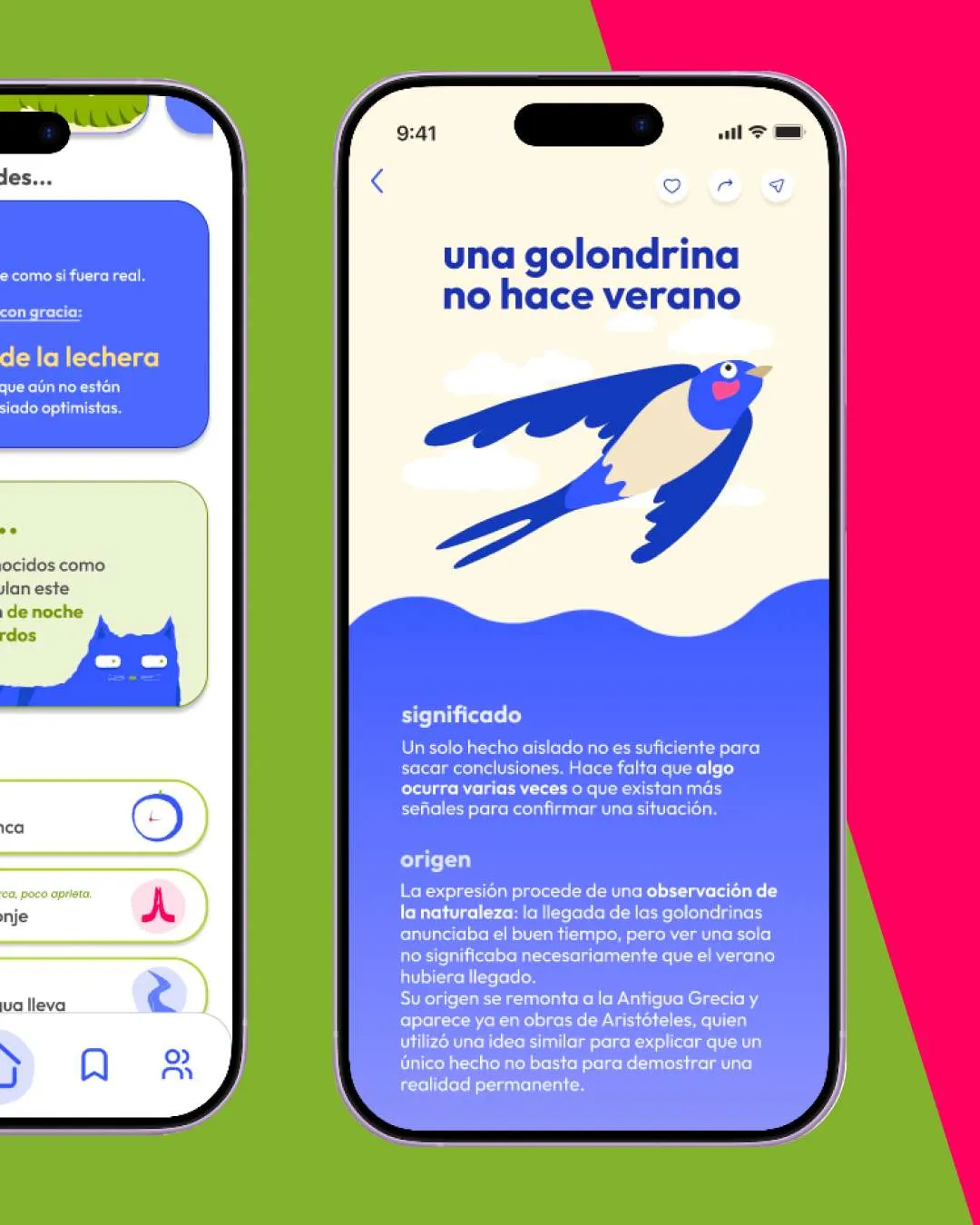
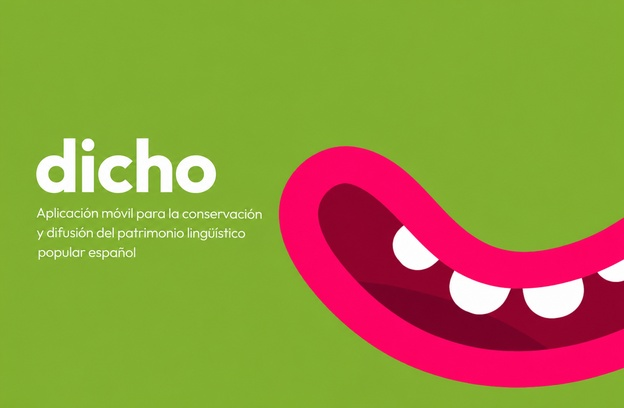
Digital product design project that develops the concept and visual identity of a mobile application aimed at preserving, sharing and promoting Spain’s popular linguistic heritage.
Noelia González Pérez
Carlos Fernández Pello
Design, Master's degree in Lifelong Learning in Digital Graphic Design Online
2026
Dicho was born from the desire to combat the loss of Spain’s intangible linguistic heritage through an attractive and accessible digital solution. Proverbs, popular sayings, archaisms and idiomatic expressions are an essential part of our collective cultural memory; however, their use is declining rapidly among younger generations, displaced by communication on social media and the widespread adoption of Anglicisms. Dicho proposes a mobile application that turns this heritage into short, everyday, gamified content, adapted to current digital consumption habits.
The main challenge is to combat the loss of Spain’s intangible linguistic heritage through a dynamic and accessible approach, overcoming the perception that learning about traditional culture is boring or of little practical value. The project also aimed to bridge the generational gap: bringing popular sayings and expressions closer to younger audiences while helping older adults understand today’s digital language, all adapted to contemporary digital consumption habits.
The inspiration comes from the richness of Spanish popular language as a vehicle for cultural memory, drawing on Unamuno’s concept of intrahistory (“the silent life of millions of people without history”) and Carmen Martín Gaite’s view of words as a vehicle for cultural memory and social experience. As product references, the project looked to Duolingo (gamification and retention), Headspace (emotional design and simplicity), Spotify (content discovery and organisation) and DailyArt (everyday cultural learning in a short-form format).

Figma
Used for prototyping and the design system.
Design Thinking and Atomic Design methodologies.
Lucide Icons icon library.
Surveys conducted through a questionnaire to collect quantitative data.
Adobe Illustrator for the development of the graphic system, illustrations and typographic composition.